Chile’s Ocean Legacy: How the Juan Fernández Archipelago and Nazca Desventuradas Islands Community Turned a Vision Into Reality
Blog
With three new management plans approved and local governance in place, Chile’s remote islands are proving how science, community, and the Government can co-create lasting ocean protection.
by Joaquin Labougle, Blue Nature Alliance Americas and Spanish lead
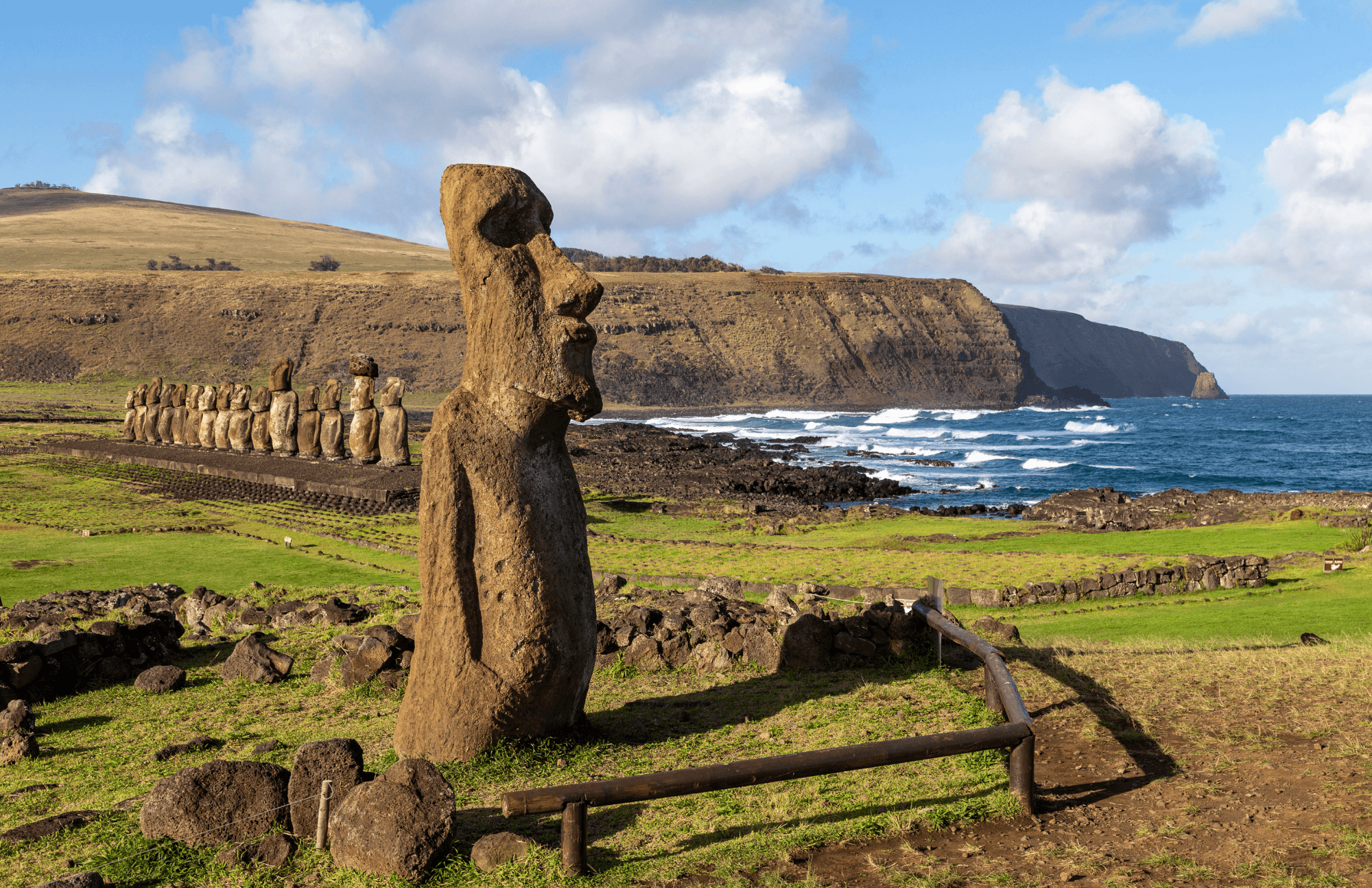
On October 2, 2025, after years of collaboration between the State of Chile and the Juan Fernández Archipelago community, Chile approved the management plan for the archipelago’s network of National Marine Parks. It includes the Juan Fernández Sea, the Crusoe and Selkirk Seamounts, the Selkirk Sea Lion Colony, the El Arenal, the Tierra Blanca, and the El Palillo National Marine Parks, which together cover an area of 263,082 km².
Together with the Nazca-Desventuradas Marine Park (300,035 km², approved June 4, 2025) and the Mar de Juan Fernández Multiple-Use Conservation Area (24,000 km², approved September 13, 2024), this marks full adoption of management plans across 587,117 km²—an area larger than mainland France.
This milestone reinforces Chile’s role and the local community of Juan Fernández as global leaders in ocean conservation and advances the Blue Nature Alliance’s mission to foster durable, community-led protection in the world’s most biodiverse seascapes.
The Journey: From Vision to Implementation
The journey began with a shared conviction: protecting these remote seas must be led by those who live there.
The Juan Fernández community, working alongside the Municipality of Juan Fernández, the Government of Chile, Oceana and Blue Nature Alliance, and academia, built the foundations for durable management—launching outreach teams, facilitating participatory planning, and co-designing governance structures to ensure lasting stewardship.
On Robinson Crusoe Island, a women-led Oceana Chile team pioneered informal “tecitos”—community tea sessions where residents discussed marine priorities and shaped decisions.
“We weren’t just consulted, we were part of every decision,” said Marcelo Rossi Escudero, “President of the Tourism Association of the Juan Fernández Archipelago.
Science, Policy, and People: Building the Foundation
Achieving durable conservation in one of the world’s most remote archipelagos required scientific rigor, interagency coordination, and strong community engagement.
Between 2022 and 2025, the local community, alongside Chilean agencies—National Fisheries and Aquaculture Service (SERNAPESCA), Undersecretariat of Fisheries and Aquaculture (SUBPESCA), and the Ministry of Environment, with the technical support of Oceana and Blue Nature Alliance—worked to align three large-scale marine management plans under new national biodiversity legislation. Each agency played a crucial and independent role in the process.
Public consultations in the Juan Fernández Archipelago reached nearly 90% of residents, ensuring that fishers, tourism operators, and families had a direct say in management planning, zoning and regulations.
“It wasn’t easy to bridge islands and institutions,” said Ignacio Petit, Project Manager at Oceana Chile. “But we learned that collaboration is the strongest current of all.”
Empowering Local Governance
True transformation came when governance shifted from centralized oversight to shared, community-based management.
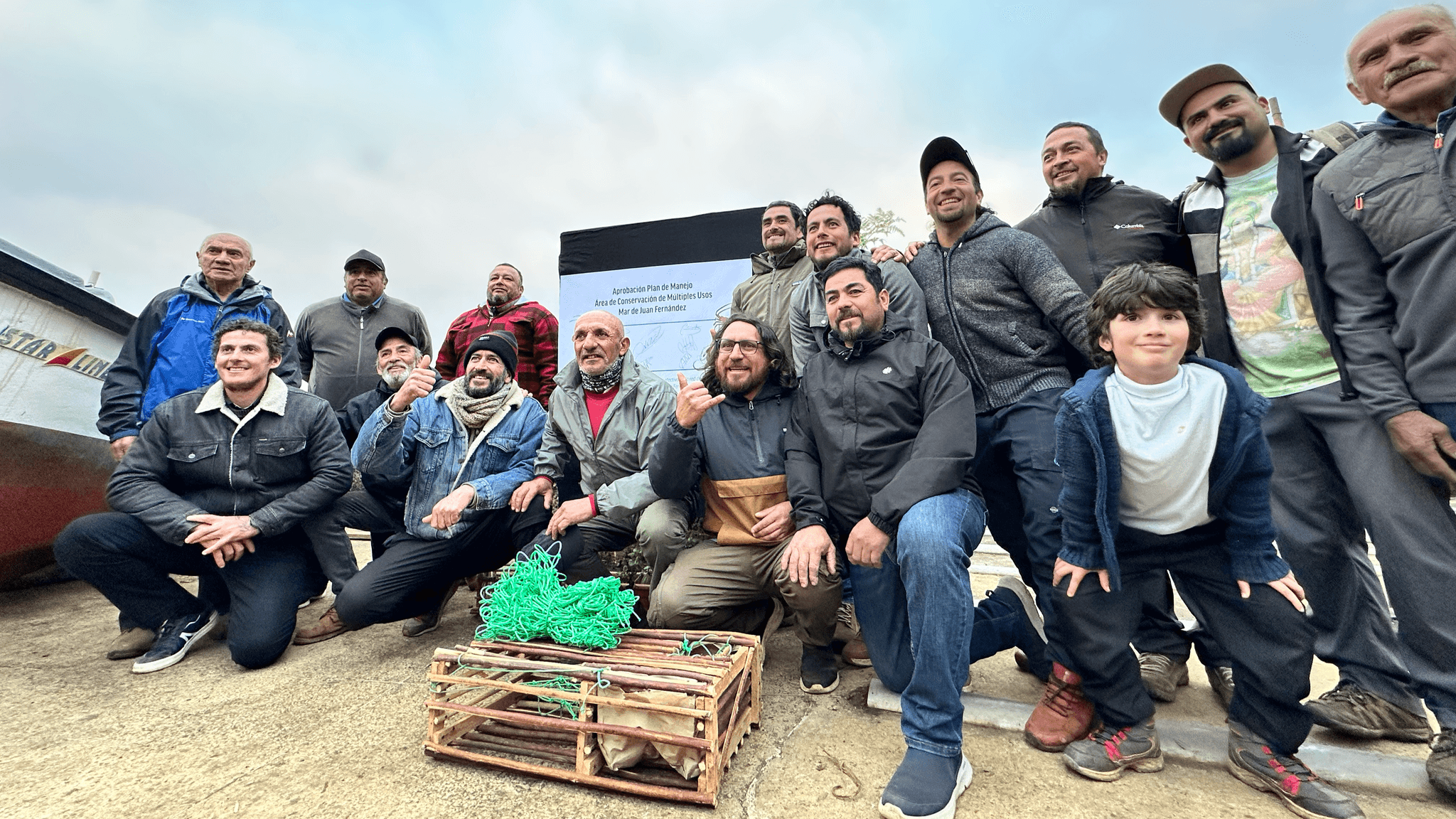
In September 2023, after a year of local dialogue, islanders created the Organización Comunitaria Funcional Mar de Juan Fernández (OCF-MJF), a legally recognized body that turned participation into lasting co-management. Its seven-member board represents artisanal fishers, tourism, women, elders, and independent members, with two-thirds of seats held by women, ensuring inclusive leadership.
In December 2024, the Chilean government established the Local Governance Council, formalizing co-management among community representatives, the Chilean Navy, Ministry of Environment, SERNAPESCA, SUBPESCA, the Municipality of Juan Fernández, and the Regional Government of Valparaíso. The council now serves as the central decision-making body for management plan implementation, surveillance coordination, and conflict resolution.
This structure anchors long-term inclusive and participatory management, linking local knowledge with national policy.
Participatory Monitoring and a Sustainable Future
A major innovation was the creation of a participatory surveillance protocol under Chile’s Centinelas del Mar (“Sentinels of the Sea”) program, empowering local observers to detect and report illegal activities.
The protocol establishes procedures for citizen participation in monitoring marine protected areas (MPAs), including the use of Vessel Monitoring Systems (VMS) and Automatic Identification Systems (AIS). Training and equipment enable “sentinels” to conduct real-time vessel tracking, strengthening coordination between islands and authorities.
Efforts are also underway to secure long-term financing, through conservation trust funds and sustainable tourism fees—to support management and operations.
“We are not just protecting the sea, we’re securing our way of life,” said Daniel González Aguirre, President of the Fishermen’s Union of the Juan Fernández Archipelago.
A Model for the World
With management plans approved, co-governance in place, and community-led surveillance underway, the Juan Fernández and Nazca-Desventuradas MPAs represent one of the world’s most comprehensive models of collaborative ocean management.
Together, these milestones strengthen protection across 587,117 km² of MPAs, advancing Chile’s contribution to Target 3 of the Convention on Biological Diversity’s 30x30 framework. This achievement reflects years of collaboration, local leadership, and institutional commitment.
For the Blue Nature Alliance, this journey demonstrates how communities leading at scale can transform ocean stewardship worldwide.