PARTNER PROFILE: Blue Azores
Turning Ocean Ambition Into Action in the Azores
Blog
© Adriano Quintela
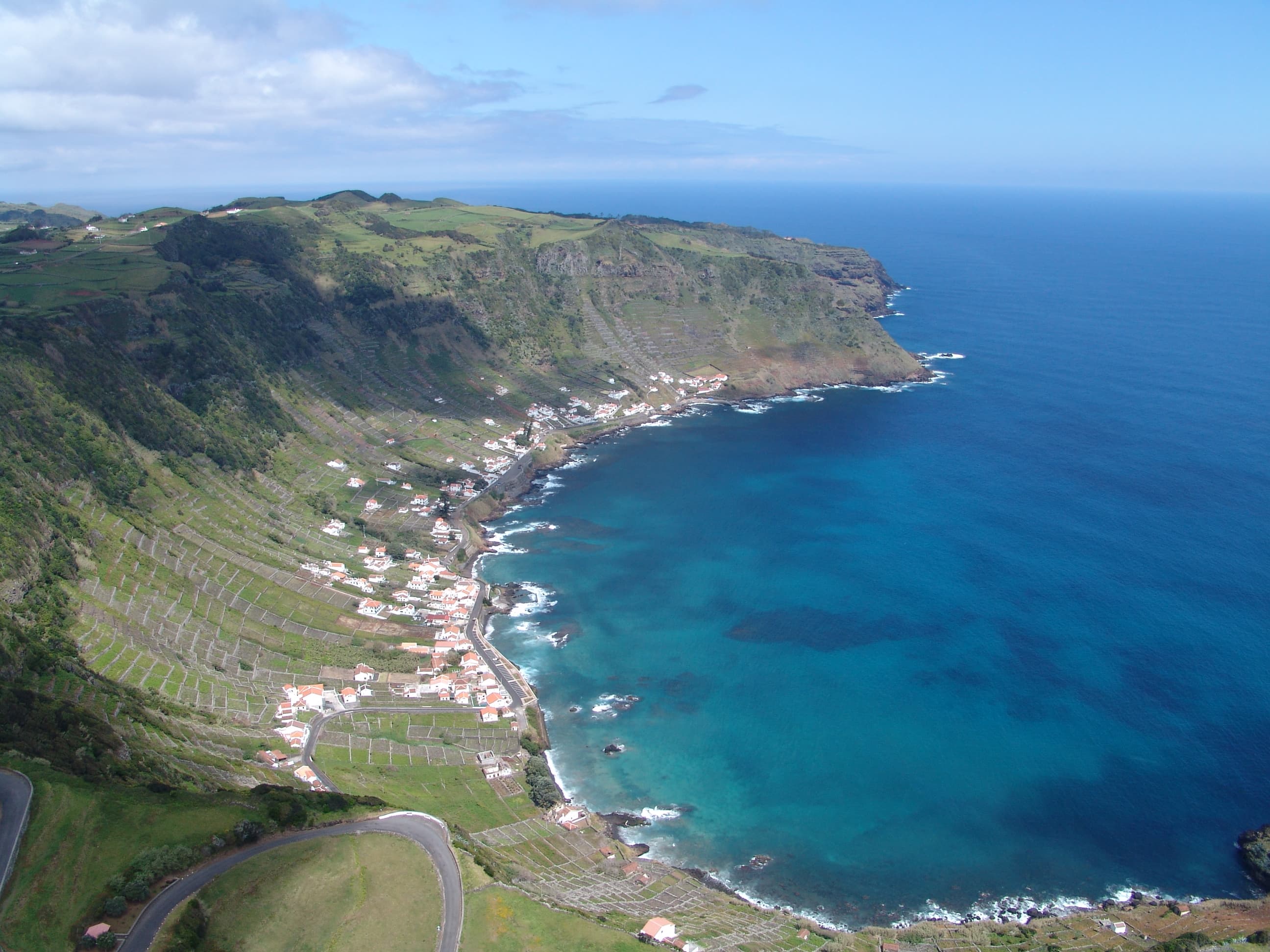
Rising from the middle of the Atlantic, the Azores are one of those rare places where ocean life gathers in spectacular ways. Hundreds of seamounts shape the seafloor here, drawing nutrient-rich currents that support whales, sharks, rays, seabirds, sea turtles, and thriving fisheries. For migratory species crossing the Atlantic, the Azores are an essential stopover, an open-ocean oasis that shows just how interconnected the ocean really is.
But like so many extraordinary marine places, the Azores are also at a crossroads. Pressures from fishing, shipping, tourism, pollution, and climate change are increasing, even as the region holds outsized importance for Europe’s ocean future. As an autonomous region of Portugal responsible for more than half of the country’s Exclusive Economic Zone, what happens in the Azores has implications far beyond these nine islands, offering a real test case for how large-scale marine protection can work in practice.
That’s where the Blue Azores initiative comes in. Led by the Regional Government of the Azores with partners including the Oceano Azul Foundation and the Waitt Institute, the initiative is working to protect 30% of Azorean waters through a network of marine protected areas. As the effort has moved from vision to implementation, partners such as the Blue Nature Alliance will be supporting the complex work of governance, financing, fisheries transition, and long-term management. It’s ambitious, deeply local, and built for the long term.
If you want to understand what it really takes to turn a big conservation vision into day-to-day reality, Adriano Quintela is a great person to hear from. In the Q&A below, he shares how Blue Azores has evolved, what it’s like to navigate politics, science, and community expectations at the same time, and why implementation, not just designation, is where ocean protection ultimately succeeds or fails.
Adriano is the Marine Spatial Planning Specialist for the Blue Azores Program. He earned a degree in Marine Biology and a PhD in Geography from the University of the Azores, where he lived for over 15 years. While in the archipelago, Adriano contributed to coastal and watershed environmental plans and engaged with stakeholders. His experience also includes working as an environmental consultant in offshore oil and gas seismic surveys, as well as conducting research at the University of Aveiro. There, he participated in several EU-funded Marine Spatial Planning initiatives, helping develop tools to evaluate the cumulative environmental impacts of human activities on marine ecosystems and participated in the National MSP process.
Tell us about your organization and its mission. How does your work contribute to marine protection or sustainable ocean management?
The Blue Azores Program is a joint initiative of the Government of the Azores, the Oceano Azul Foundation, Waitt Institute and the Blue Nature Alliance, advancing marine protection through inclusive governance, community engagement, and collaboration with fishers, scientists, and civil society.
In the Azores, the ocean is not a backdrop; it is who we are. Surrounded by deep waters and shaped by centuries of connection to the sea, we’ve learned that protecting the ocean is inseparable from protecting our future. Blue Azores was created to honor that relationship by helping build a new model of ocean stewardship, one that is ambitious, science-based, and deeply rooted in the realities of island life.
Our mission is to support the long-term protection and sustainable management of the Azores’ marine ecosystems through a well-designed, effectively managed network of marine protected areas. By working at the intersection of science, policy, and community engagement, we help turn bold commitments into lasting protection, ensuring the ocean remains vibrant, productive, and resilient for generations to come.
How did your collaboration with the Blue Nature Alliance begin, and what has it enabled or strengthened?
Our collaboration with the Blue Nature Alliance grew out of a shared recognition: that the Azores could play a global leadership role in ocean conservation, but that doing so would require strong partnerships and collective ambition. Since it came on board, the Alliance brought not just resources, but a sense of solidarity, connecting a remote archipelago to a global movement for large-scale, high-quality marine protection.
This collaboration has strengthened our technical capacity, sharpened our strategic focus, and reinforced our belief that transformative conservation is possible when local leadership is supported by global expertise. It has helped ensure that the Blue Azores vision is not only bold, but durable.
What recent achievement or milestone are you most proud of, and why?
One of our most significant recent achievements is the approval of EGRAMPA – the Management Strategy of the Azores Marine Protected Area Network – a historic milestone for the Azores and marine conservation globally. With its publication in the Official Journal, EGRAMPA provides the strategic framework guiding the effective implementation of the largest marine protected area network in the North Atlantic.
Grounded in science and designed to be adaptive over time, EGRAMPA sets clear objectives for conservation, governance, and sustainable use, while guiding the development of management and marine spatial planning tools. It embeds continuous monitoring, evaluation, and adaptive management at its core, integrates stakeholders through participatory and co-management approaches, and lays the foundation for sustainable long-term financing.
Aligned with the restructuring of the fisheries sector for 2025–2030, the strategy seeks to balance ecological integrity with social and economic sustainability. This milestone reflects years of scientific work, broad stakeholder engagement, and strong political leadership supported by the Blue Azores program and marks a decisive shift from designation to delivery, demonstrating how island regions can lead globally in durable, high-quality ocean protection.
What is the most significant challenge or opportunity for ocean conservation in your region right now?
The greatest challenge now is ensuring that protection is not only declared, but lived – through effective management, enforcement, and long-term financing. Climate change adds urgency, reshaping ecosystems, and increasing uncertainty for island communities that depend on the sea.
Yet this moment also presents a rare opportunity. The Azores can become a global example of how marine protected areas can be climate-smart, community-supported, and economically viable. By investing in quality, not just coverage, the region has the chance to define what next-generation ocean protection looks like.
How do local communities shape, inform, or lead your work?
The Blue Azores vision is grounded in the principle that marine conservation must be locally led, socially inclusive, and publicly accountable. Island communities, including fishers and other ocean users, hold generations of ecological knowledge, lived experience, and cultural relationships with the sea that actively shape priorities, inform decision-making, and guide implementation.
Our role is not to prescribe solutions, but to create inclusive spaces for dialogue, participation, and shared governance, ensuring that diverse voices – across sectors, ages, and genders – are meaningfully engaged. Through transparent processes and ongoing collaboration, we work alongside communities, scientists, and decision-makers to co-design conservation measures that respect local livelihoods, cultural identity, and social equity.
By embedding public participation throughout the process, we aim to foster shared ownership of marine protection, strengthen trust, and support a lasting, community-driven culture of ocean stewardship.
What’s next for your organization? (Upcoming priorities, innovations, or aspirations for ocean protection.)
The next chapter for Blue Azores is about making protection endure. Our focus is on strengthening management and governance, securing sustainable financing, and ensuring that marine protected areas deliver real benefits for nature and people. We also aim to share the Azores’ story more widely, so that lessons from these islands can inspire ocean protection far beyond the North Atlantic.
Our aspiration is that, years from now, the Azores will be known not only for the beauty of its ocean, but for the care, courage, and collaboration that helped protect it.