PARTNER PROFILE: McKinsey
Financing the Future of Ocean Protection
Blog
© Georgina Goodwin
Around the world, the ambition to protect and restore ocean ecosystems is growing, but ambition alone can’t safeguard marine biodiversity. Lasting conservation depends on durable financing and implementation strategies that can withstand political cycles, funding shifts, and changing market conditions. Many marine protected areas (MPAs) are designated with bold commitments, yet lack the long-term financial architecture needed to support management, monitoring, enforcement, and community partnerships. Bridging this gap between vision and viability has become one of the defining challenges, and opportunities, in global ocean conservation.
That’s where the partnership between Blue Nature Alliance and McKinsey comes in. Working alongside site partners, the collaboration brings together financial planning, data-driven analysis, and implementation support to help ensure marine protections are not only established, but can be sustained over time. In the following conversation, Emma Kandelaars, co-lead of McKinsey’s global nature portfolio, reflects on how this work is helping move conservation from ambition to implementation.
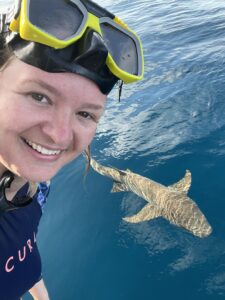
Emma Kandelaars is a partner with McKinsey and co-leads their global nature conservation work. With over a decade at the firm, she supports governments, NGOs, and donors around the world on conservation strategy, sustainable financing mechanisms, and livelihoods. Her work includes supporting countries across Africa, Asia, and the Americas to implement Global Biodiversity Framework commitments. Emma also oversees McKinsey’s support to the Blue Nature Alliance. Emma holds an MPA from London School of Economics and a BSc in Econometrics from Erasmus University Rotterdam, and sponsors McKinsey’s nature analytics work. In her free time, Emma is a passionate diver and photographer.
Tell us about your organization and its mission. How does McKinsey’s work contribute to marine protection or sustainable ocean management?
At McKinsey, we are committed to helping organizations accelerate sustainable and inclusive growth. We work with clients across the private, public, and social sectors to solve complex problems and create positive change for their stakeholders. For conservation, this means helping partners translate ambition in to practical strategies, grounded in economic analysis, implementation planning and long-term sustainability. Across a range of collaborations, including with Enduring Earth, SPACES, the World Economic Forum, and Blue Nature Alliance, this work has supported efforts associated with more than 15 million sq km of land and ocean protection.
How did your collaboration with the Blue Nature Alliance begin, and what has it enabled or strengthened?
Since our work with the Blue Nature Alliance began in 2021, our teams have been able to contribute to the establishment, management, and financing of more than 20 MPAs, covering over 2 million square kilometers of ocean, while supporting countries in their ambitions to achieve the Global Biodiversity Framework target to protect 30% of the world’s oceans by 2030. To achieve this impact, we support country teams through robust economic analyses, in-depth geospatial analytics, and detailed case examples to showcase the social, economic, and ecological benefits these marine protected areas can generate, as well as a path towards sustainably financing those areas through the design of financing facilities and innovative financing mechanisms.
What recent achievement or milestone are you most proud of, and why?
Most recently, we completed our eleventh phase of work with the Alliance after over five years of partnership. Some recent accomplishments of that partnership include supporting Niue Ocean Wide and Conservation International in launching an innovative conservation model that puts a monetary value on the ecosystem services of a marine park, supporting an Indigenous Council in identifying potential financing mechanisms for an MPA in the Pacific, and providing economic analyses to inform potential financing options for high seas MPAs.
What is the most significant challenge or opportunity for conservation you see across your broader support for nature work?
One of the most significant challenges remains the gap between global conservation ambition and the financing required to sustain it over time. For example, there is nearly a ~$4 billion USD funding gap for protected areas to reach the Kunming-Montreal Global Biodiversity Framework targets. At the same time, more than 50% of conservation funding comes from a relatively small group of bilateral and multilateral sources, making it vulnerable to changes in priorities over time. The good news is, there is a growing opportunity in the emergence of new financing approaches that bring together public and private capital and seek to align conservation priorities, such as Project Finance for Permanence (PFP) transactions, Debt Conversions, Blue Bonds, Blue Economy-based financing and others. The next phase will be less about innovation in isolation, and more about scaling these approaches in ways that are resilient, context-specific and durable.
How do you work with Alliance site partners to shape or inform the direction of your work, including local communities and/or Indigenous Peoples?
Our work with the Alliance is focused on supporting the site partners, which often include community leaders and Indigenous Peoples, achieve their goals. We follow a close collaboration model: meeting partners multiple times a week so they can set our team’s priorities and provide feedback that steers our work. This integrated partnership is essential to ensuring the analyses we develop are appropriate and impactful in the local context. Community and Indigenous partners play an especially important role as their knowledge of a site’s unique political, economic, and cultural factors are exceptionally valuable for effective long-term conservation and sustainable financing.
McKinsey partners with many NGOs on conservation and sustainability topics. What makes your work with the Blue Nature Alliance distinct?
What distinguishes our work with the Blue Nature Alliance is the long-term commitment to the partnership, and the ability to work across multiple sites and stages of development. In the past years, we have worked with partners across dozens of sites, on a wide range of topics, including supporting analysis of long-term financing mechanisms for a large-scale MPA in Rapa Nui, informing the design of marine-focused financing facilities in the Western Indian Ocean and Caribbean, developing cost models to size costs to implement protections for offshore MPAs in the Azores, and more.
For each site that we support, we take a thorough approach to help our partners get to a strong set of solutions. For example, our team recently supported the design of a potential regional conservation financing facility: using geospatial data to map existing MPA coverage vs. key biodiversity areas in 10 countries, sizing a ~$400M funding gap to meet regional conservation commitments, analyzing the funding flows and governance of 14 peer financing facilities, interviewing 12 leaders and experts across local NGOs and financing institutions, facilitating two workshops with regional stakeholders, and analyzing pain points of historical financing initiatives to co-create a fact base with design principles and opportunities for a new facility.
Beyond McKinsey team support to the Blue Nature Alliance, our fellowship program offers a year-long paid leave of absence through which our colleagues can work for the Blue Nature Alliance. This allows us to extend our partnership beyond the scope and timeline of specific projects, and enables deeper knowledge and capability sharing between our organizations.
What’s next for your organization? (Upcoming priorities, innovations, or aspirations for ocean protection).
We are excited to continue our partnership with the Blue Nature Alliance as it enters into its second phase. We are committed to finding new ways of working together that are beneficial to the Alliance, the Alliance’s partners, the world’s seas and oceans, and the communities that depend on them. We are looking forward to working together to drive advances in marine conservation, including new financing mechanisms, as well as exploring the benefits that AI could bring. We hope that together, we can continue to be a force for good for our incredible planet.