Partner Profile: WIOMSA
Building the People and Institutions the Western Indian Ocean Needs
Blog
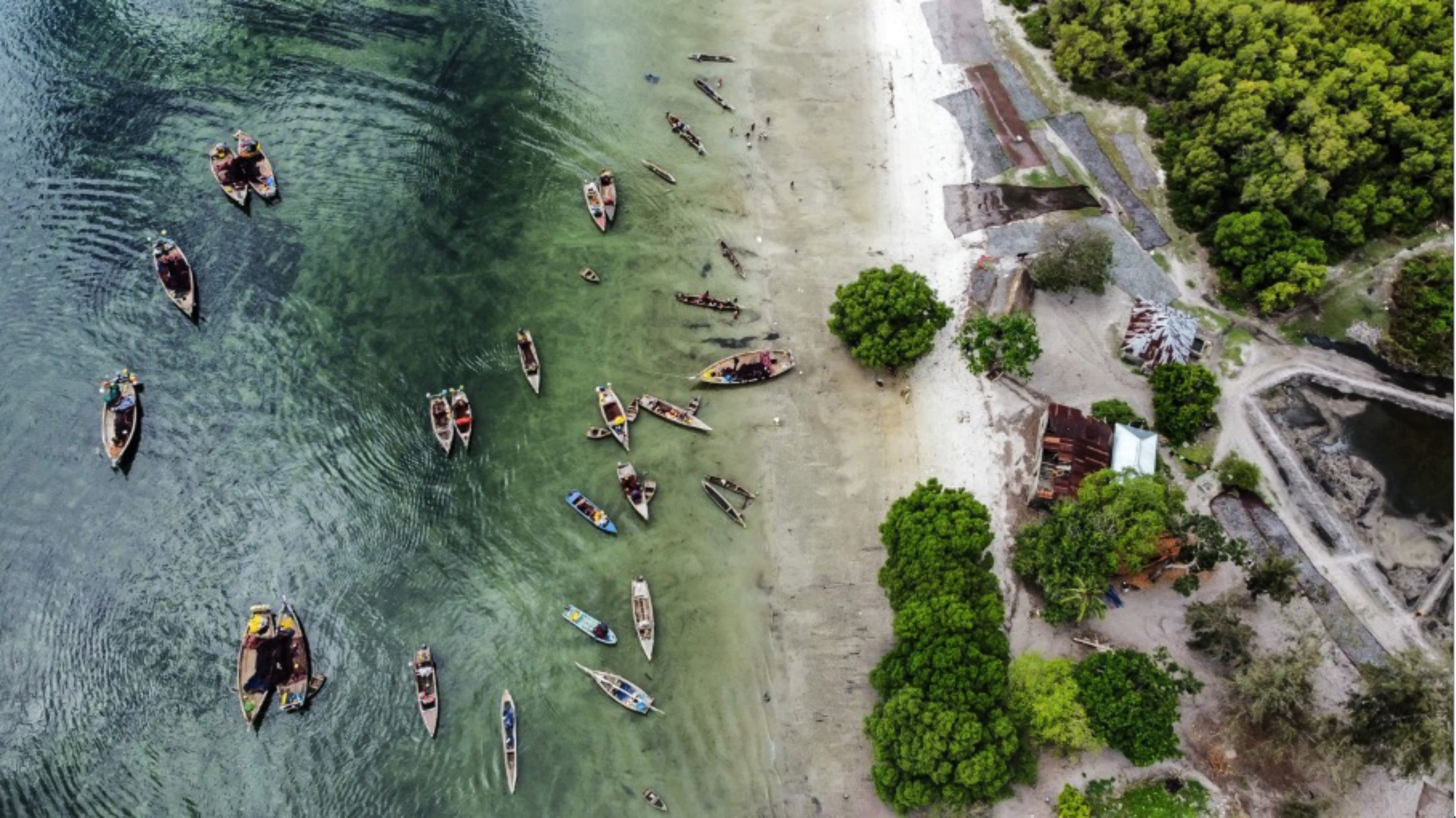
© Nimrod Ishmael/WIOMSA
When delegations from more than 100 countries gathered in Mombasa this spring for the Our Ocean Conference, Africa had the microphone. Announcements on marine protected areas (MPAs), blue finance, and regional cooperation added fresh momentum to a continent increasingly setting the agenda on ocean protection, rather than following it.
Few people have shaped that momentum as quietly or as consistently as Arthur Tuda. As Executive Director of the Western Indian Ocean Marine Science Association (WIOMSA), he has spent 30 years working across science, policy, people, and practice in 10 coastal and island nations stretching from Somalia to South Africa — a region wrapping coral reefs, seagrass meadows, and mangrove forests around some of the planet's richest marine biodiversity, and millions of livelihoods that run directly on the health of the sea.
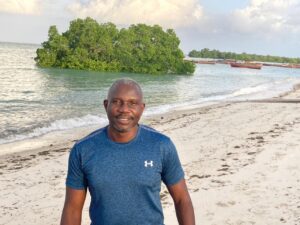
Under his leadership, WIOMSA has grown into one of the region's most trusted conveners, linking governments, scientists, and communities who might otherwise work in isolation. That track record is why his perspective carries weight well beyond his own organization: as global attention turns to Africa for lessons in effective, lasting ocean conservation, Tuda is one of the people others look to for answers.
In the Q&A below, he talks capacity gaps, long-term finance, and what the world can learn from three decades of building conservation infrastructure in the Western Indian Ocean (WIO).
Tell us about your organization and its mission. How does your work contribute to marine protection or sustainable ocean management?
WIOMSA connects science, people, and institutions to improve ocean management. For over 30 years, it has strengthened marine science, built regional capacity, and translated knowledge into policy. In conservation, success depends on more than just creating MPAs; it requires capable people, strong institutions, sustainable finance, community ownership, and adaptability. WIOMSA focuses on these foundational elements – the often unseen infrastructure that ensures lasting conservation results.
How did your collaboration with the Blue Nature Alliance begin, and what has it enabled or strengthened?
Our collaboration with the Blue Nature Alliance grew from a shared understanding that ambitious protection targets will only matter if the areas being protected are effectively managed and can endure over time.
The partnership has enabled us to strengthen a regional approach to marine conservation, particularly through WIOMSA's Marine Conservation Programme (MARCOP) and the Western Indian Ocean Marine Protected Areas Network (WIOMPAN).
This work connects managers across countries, strengthens capacity, assesses management, and creates learning opportunities. The key contribution is shifting marine conservation in the WIO region to focus on whether protection is effective and sustainable.
What is one recent success or milestone you're most proud of, and why?
I am proud of the growing community of marine conservation practitioners through WIOMPAN. Across the Western Indian Ocean, many MPA managers operate under tough conditions – limited resources and increasing ecological and social pressures. Yet, these practitioners possess vast knowledge. With Blue Nature Alliance support over the past four years, we’ve improved management assessments, professional development, peer exchanges, and regional learning. We help managers learn from experience and each other. Conservation success depends on thousands of daily decisions by people and institutions. Therefore, building a community that learns, adapts, and solves problems together is a vital investment.
What is the most significant challenge or opportunity for ocean conservation in the WIO right now?
30x30 – the Kunming-Montreal Global Biodiversity Framework's target of 30% of the ocean protected by 2030 – offers an opportunity for the Western Indian Ocean, but more protected areas don't always mean better conservation. Increasing protected areas heightens management challenges: more ecosystems to monitor, more communities to engage, more conflicts to resolve, greater enforcement needs, and more funding required. 30x30 is more than a space target; it's about building institutions. By 2030, success isn't just about mapped areas, but having capable people, functioning institutions, sustainable funding, good governance, and community support. If achieved, 30x30's true legacy will be a stronger, lasting conservation system.
How do local communities and/or Indigenous Peoples shape, inform, or lead your work?
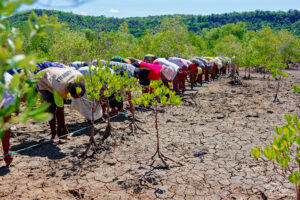
Across the Western Indian Ocean, coastal communities are rights- and knowledge-holders who have managed marine resources for generations. Their experience shows conservation is strongest when people have agency over resources. For WIOMSA, this means integrating scientific and local knowledge and moving beyond consultation. Communities need meaningful decision-making roles, access to knowledge and resources, institutional support, and fair benefits. Durable conservation must be built with communities and led by them, not merely imposed from outside.
What are the biggest capacity gaps, and how can governments, practitioners and donors help close them?
One common mistake is equating capacity with training. Training a manager alone isn't enough if the institution lacks staff, authority, funding, equipment, or proper systems. Capacity isn’t just about individuals. It’s a system including competent people, leadership, organizations, institutional memory, career paths, financing, and the ability to learn and adapt. Governments must treat conservation as a professional service and invest in institutions and staff. Practitioners need strong networks and learning opportunities. Donors can help by focusing on building capability rather than short-term projects. Investments should leave sustainable solutions that continue after the grant ends.
How can Africa secure the long-term finance needed for durable ocean conservation?
Africa's conservation finance issue isn't just about securing more money, but about creating a predictable, diversified, and durable system. Protected areas can't rely solely on short-term projects. Governments should gradually embed conservation into budgets and develop mechanisms like trust funds, tourism, blue finance, blended finance, and sector partnerships. International finance remains vital, but its design is crucial; funding should strengthen institutions to prevent recurring issues. Recognizing the value of healthy marine ecosystems – fisheries, tourism, coastal protection, biodiversity, and climate resilience – is essential, and a portion of this value should reinvest in preserving these systems. There's no single financial fix; instead, building diverse funding portfolios will ensure resilient conservation efforts unlike dependence on one source.
What lessons from the Western Indian Ocean can help other regions build the people, partnerships and institutions needed for effective ocean conservation?
The Western Indian Ocean teaches us that conservation is about building institutions and relationships. Projects may come and go, but people and institutions endure. Strong systems develop over time through collaborations among governments, communities, scientists, practitioners, civil society, and funders. Networks enable knowledge sharing; communities carry experience; institutions preserve knowledge and ensure continuity. Learning is vital because no conservation plan remains static. WIOMSA exemplifies this, having fostered a regional community of knowledge, relationships, and institutions over 30 years. The key lesson: fund more than projects – invest in people, relationships, and institutions to sustain conservation efforts long-term.
What's next for WIOMSA?
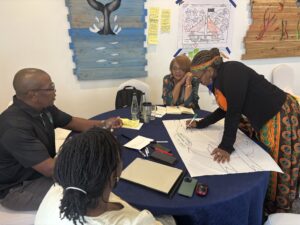
Our goal is to help the Western Indian Ocean shift from isolated conservation projects to a learning, adaptive system. We produce vast knowledge through research, monitoring, assessments, community input, and evaluations. The challenge isn't lack of data, but inconsistent use in decision-making. We aim to improve this feedback loop – evidence, decision, action, learning, and adaptation – by professionalizing the conservation workforce, enhancing WIOMPAN, and investing in competency development. We also want successful ideas to spread, understanding why they worked and how to adapt them elsewhere. WIOMSA's future isn’t just about generating more knowledge but enabling the region to learn faster than its problems grow.