The Antarctic Peninsula: An Opportunity to Advance Global Ocean Conservation
As governments prepare to meet in Hobart, sustained international cooperation offers an opportunity to strengthen the protection of one of the world’s most important marine ecosystems.
Blog
By Sarah Elsaid, Senior Regional Officer for Europe and the Polar Regions, and Claire Blanchard, Global Advocacy Lead, Blue Nature Alliance
More than fifteen years ago, Members of the Commission for the Conservation of Antarctic Marine Living Resources (CCAMLR) committed to establishing a representative system of marine protected areas (MPAs) across the Southern Ocean. That commitment remains as important today as when it was first made. During the next two weeks, governments meeting in Hobart, Tasmania, have an opportunity to advance that ambition and deliver real progress.
Achieving consensus among more than 20 governments is never simple, as it requires sustained political engagement, scientific cooperation, and an understanding of different national interests and priorities. In today’s geopolitical environment, that work is increasingly complex, but no less important. The urgency for action is clear. The Southern Ocean is warming at double the global average. These accelerating environmental shifts are affecting sea ice and placing greater pressures on Antarctic krill. For the second consecutive year, the krill fishery has reached its precautionary catch threshold, raising concerns about where fishing is occurring and how it affects wildlife that depend on concentrated krill populations. This is underscoring the need for effective, science-based management that can respond to a changing ecosystem.
A Rare Opportunity to Move 30x30
Countries have committed to protecting 30% of the world's ocean by 2030, including the high seas, yet only a small fraction is effectively protected today. Reaching the goal will require protection at a scale and pace the global conservation community has not yet delivered.
The Southern Ocean offers an important opportunity to translate international biodiversity commitments into tangible conservation outcomes. The four proposed Antarctic MPAs would conserve and provide protection of an additional 4.5 million square kilometers of globally important ocean. Combined with existing protections, that would bring approximately 26% of the Southern Ocean under protection and contribute 2.6% of the global ocean toward 30x30. With scientifically developed proposals on the table, an established institutional framework, and a longstanding political commitment, CCAMLR Members have an opportunity to demonstrate that international cooperation can deliver ocean protection at scale.
Domain 1 and the Krill Question
At the center of this opportunity is the proposed Domain 1 MPA in the Antarctic Peninsula. Developed through years of scientific research and international negotiations, the proposal's adoption would deliver long-overdue protection to an extraordinary region and advance efforts to establish a representative network of marine protected areas across the Southern Ocean.
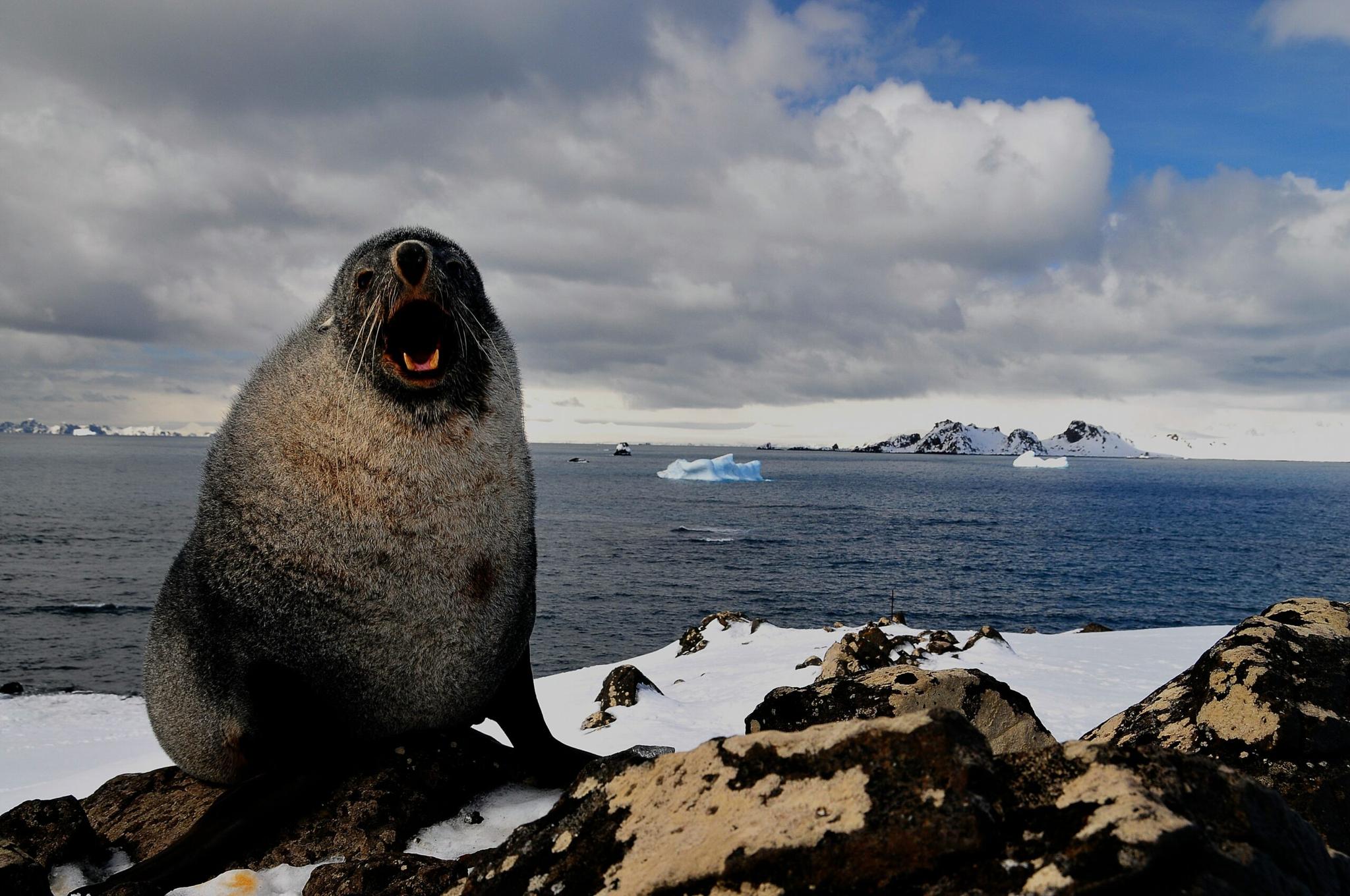
It is also about something more immediate: whether the international community can protect an ecosystem while responsibly managing human activities that are increasing in the region. That matters especially for krill, the foundation of the Southern Ocean food web, sustaining penguins, seals, rebounding whale populations, and numerous other species. After a key conservation measure expired in late 2024, safeguards that had distributed fishing effort across four management zones lapsed, and no replacement was agreed at CCAMLR's 2025 annual meeting.
The concern is not simply how much krill is harvested, but where. Penguins and other predators depend on dense local concentrations of krill around breeding and feeding areas. Increasingly concentrated fishing in these hotspots can reduce local prey and force predators to travel farther for food, just as climate change is stressing their habitats. CCAMLR's own Scientific Committee has described this concentration as "not precautionary" and called for urgent reform.

Conservation and sustainable use should be understood as complementary objectives. A healthy krill fishery depends on a healthy ecosystem, and protecting the ecosystem means protecting the places where wildlife feed, breed and depend on concentrated prey, supporting nature's capacity to adapt to a changing climate. Domain 1 is an opportunity to do both.
The Importance of Sustained International Cooperation
The significance of protecting the Antarctic Peninsula extends beyond the region itself. The ocean does not conform to political boundaries. Currents connect ecosystems thousands of miles apart, and species cross national jurisdictions, like the humpbacks that forage in Antarctica, then travel to breed and give birth in Tonga. Thus, the importance of the decisions made by CCAMLR demonstrates both the opportunities and complexities of managing shared ocean spaces through international cooperation. CCAMLR was created around this idea. As countries begin to work to implement international ocean agreements and global biodiversity commitments, the experience of CCAMLR highlights the importance of institutions capable of sustaining cooperation, building consensus and translating shared objectives into effective conservation measures.
There are reasons for optimism and to remain engaged and constructive, as there are growing signals for greater ocean stewardship. Support for the proposed D1 MPA from industry stakeholders, alongside wider developments in international ocean governance, gives an opportunity for a breakthrough this year. We have witnessed a renewed investment in diplomatic progress ahead of Hobart at a time when international cooperation faces significant challenges. This year’s meeting offers CCAMLR members the chance to demonstrate consensus that ensures a path forward in protecting shared interests and the global commons.
Now is the opportunity to advance protection of the Antarctica Peninsula, strengthen precautionary krill fisheries management and build momentum toward the representative network of MPAs envisioned more than 15 years ago.